Based in Finland · 🤝Serving Locally & Globally🌍info@finlandglobalconsulting.com+358 40 367 0950


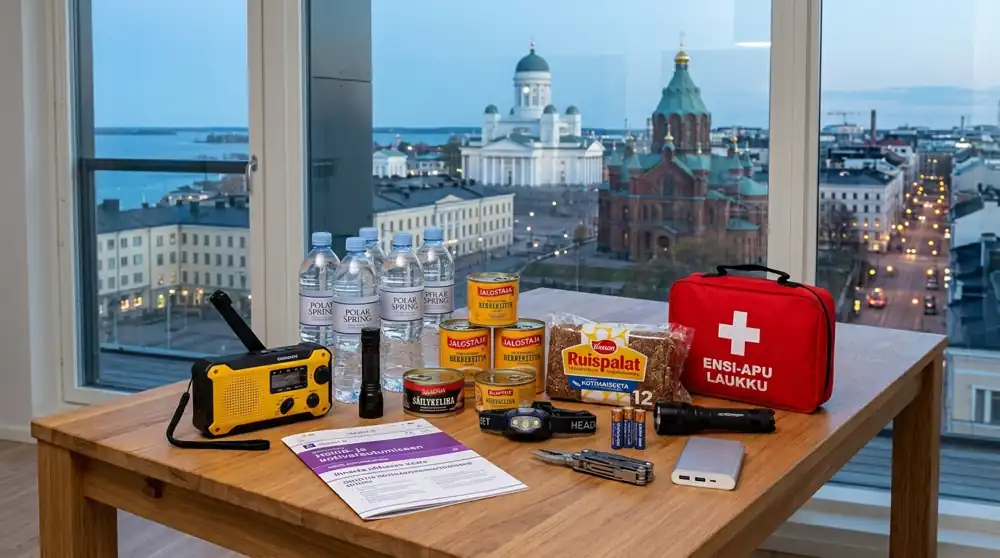
The Ministry of the Interior will post a short printed guide on preparing for disruptions and crises to about 3.5 million homes and businesses in mainland Finland in January. It will be in Finnish, Swedish and Sámi. Here is what international residents should know.
Finland’s Ministry of the Interior will post a printed guide on preparing for disruptions and crises to around 3.5 million households and businesses in mainland Finland in January 2027, Yle reported on 14 and 15 October 2026. The guide will explain how people can prepare for situations such as long power or internet outages, and it will include advice on the threat posed by drones.
Finland’s main preparedness guide, Preparing for incidents and crises, was published online on Suomi.fi in November 2024. At the time, the ministry decided not to print it for every household, explaining that printing would be expensive and that an online guide is easier to update. Sweden, by contrast, has posted its own crisis booklet to homes.
The thinking has since changed. A printed guide still works when the electricity and the internet do not, and the ministry now says that online instructions alone are not enough. Prime Minister Petteri Orpo said in May 2026 that a guidebook for households was being prepared, and the Parliamentary Ombudsman has also said that the current way of informing people about preparedness is not sufficient. In May 2026 the ministry also launched a project to produce more guidance on preparing for emergency conditions, while stressing that Finland is not facing an immediate military threat.
According to the ministry, the least prepared groups are young adults and people living in cities.
The printed guide’s drone section will draw on advice already published by Finland’s rescue services. In short:
The full advice is on the rescue services’ website.
Separately, Finland is introducing FI-Alert, a system that sends emergency warnings directly to mobile phones in an affected area. No app or registration is needed: the phone only has to be switched on and set to receive emergency (Cell Broadcast) alerts. Yle reported on 16 October 2026 that the law was expected to come into force at the beginning of November.
This is good news for everyone in Finland, but it leaves a gap for many of the people we work with. The printed guide will arrive in Finnish, Swedish and Sámi only, so a newcomer who does not yet read Finnish or Swedish may receive it, not understand it, and put it aside with the advertising post. Preparedness information matters most when it can be read without the internet, so we recommend getting ready before January:
Preparedness is not a sign that something is about to happen. In Finland it is treated as an everyday civic skill, and the authorities present it as practical advice rather than a warning. Being prepared simply makes it easier to cope with a storm, a long power cut or another disruption, and to help the people around you.
At FGC, part of our Relocation & Integration support is helping newcomers understand how everyday life and public services work in Finland, including official letters and information that arrive only in Finnish or Swedish. We will update this article when the ministry publishes more details about the printed guide, such as delivery dates or language versions.
Related guides: Using health services in Finland: health centres, Omaolo, 116 117 and 112 and Before you move to Finland: a step-by-step preparation checklist.